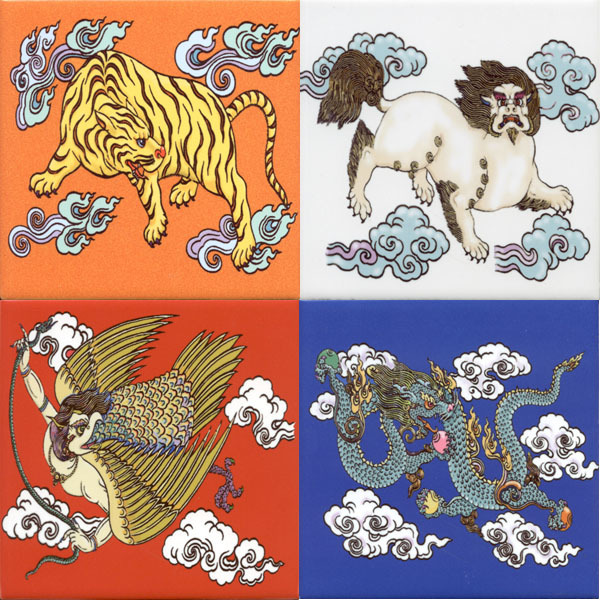
Most Bhutanese people are aware of these four animals: the Garuda,
the Dragon, the Snow Lion, and the Tiger as they are deeply rooted in our culture. They are seen in
the corners of many prayer flags, painted on building walls inside monasteries,
crafted on four corners of the buildings, embroidered as hanger and made in
masks to display.
Known collectively as "The
Four Dignities," they represent sacred qualities and attitudes that
Bodhisattvas develop on the path to enlightenment; qualities such as confidence
(Tiger),
clear awareness (Snow
Lion), fearlessness (Garuda),
and gentle power (Dragon).
The Four Dignities are mythical
animals, which represent various aspects as under:
Tak (Tiger)
The Tiger abides in the South,
symbolizing unconditional confidence, disciplined awareness, kindness and
modesty. It is relaxed yet energized; resting in a gentle state of being that
has a natural sense of satisfaction and fulfillment, referring to the state of
enlightenment.
Associations: main quality is
confidence, dominance over forest, and the air element.

Seng (Snow Lion)
The Snow Lion resides in the East and represents unconditional
cheerfulness, a mind free of doubt, clear and precise. It has a beauty and
dignity resulting from a body and mind that are synchronized. The Snow Lion has
a youthful, vibrant energy of goodness and a natural sense of delight.
Sometimes the throne of a Buddha is depicted with eight Snow lions on it; in
this case, they represent the 8 main Bodhisattva-disciples of Buddha
Shakyamuni, the historical Buddha.

Chung (Garuda)
The Garuda is daring and fearless and abides in the north. With
great strength and power it soars beyond without holding back. It symbolizes
freedom from hopes and fears, the vast mind without reference point. It is a
powerful antidote to the negative influences of Nagas (spirits), which can
cause disease and all kinds of harm.
Associations: main quality is wisdom, dominance over the sky, and the fire element.
Associations: main quality is wisdom, dominance over the sky, and the fire element.

Druk (Dragon)
The Dragon thunders in the sky with the sound of compassion that
awakens us from delusion and increases what we can know through hearing.
Dragons have the power of complete communication. Just as we do not see sound,
we do not see dragons -at least not usually. Displaying a dragon banner is said
to protect one from slander and enhances one's reputation.
Associations: main quality is power, dominance over the sea, and the water element.

No doubts, Tak, Seng,
Chung, Druk are four powerful animals and considered highly symbolic and
powerful. As such one should have such symbol at home.


